
Concepts
Stravia is local or self-hosted agent infrastructure for connecting clients to model services and platform capabilities. It is not a visual workflow builder or a system for defining arbitrary user agents.
Follow one request through Stravia
- A model service is an upstream provider connection, including its endpoint and authentication.
- A Model ID is the name a client sends to Stravia.
- A destination associates that Model ID with an upstream model and model service.
- An API key authenticates the client and may restrict which Model IDs it can use.
- Request history records the interaction; Usage summarizes upstream-reported quantities.
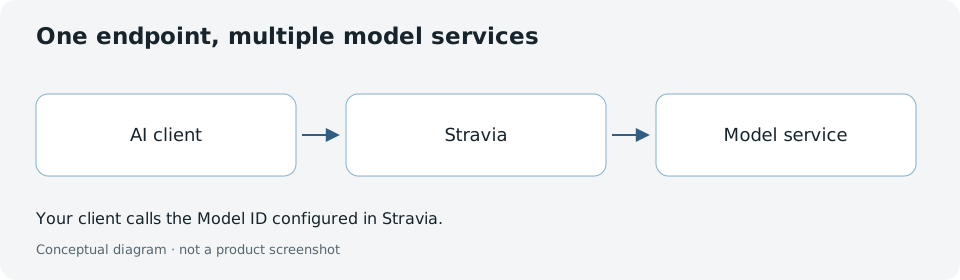
For example, a client can call my-model even if the configured destination uses a different upstream model identifier. Stravia applies the saved destination configuration; the client does not need the upstream service credential.
Distinguish setup from a successful request
Saving an upstream service does not add a client-facing model. Adding a model does not create a client key. A generated client preview does not launch that client. Each step has its own observable result; a completed response and matching Request history entry confirm the full path.
Continue by task
- Model services explain upstream connections.
- Models and routing explain IDs and destinations.
- API keys explain client access.
- Request history and Usage and allowances explain the resulting records and quantities.
- Use Quick start to exercise the complete first journey.